
Where carlines break down
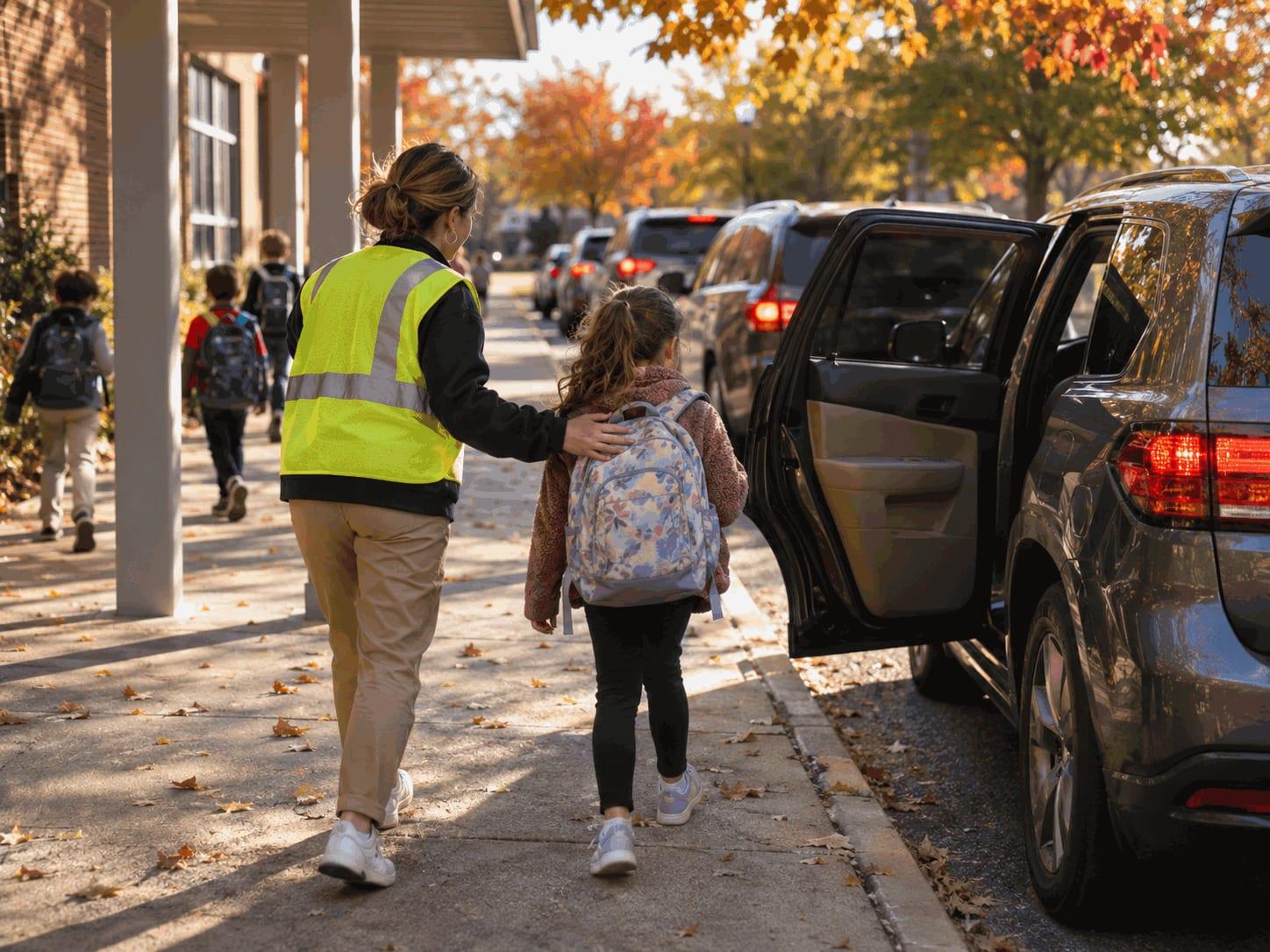
Most carline trouble does not start at the curb. It starts earlier: a change that reached the office but not the dismissal team, a car rider who is now going to aftercare, a family number that no longer matches the adult driving. By the time the vehicle reaches the loading zone, staff are searching for a child or radioing the office while the queue backs up toward the street.
A car line pickup system should reduce those surprises. That means one current list of today’s car riders, a clear signal when a family has arrived, a calm way to call and stage students, and a defined place to send anything that does not fit the routine. The physical layout matters as much as the software; our carline improvement guide covers cones, crossings and loading positions in detail.
Parent arrival and calling students
In SchoolsOut, a parent in a configured carline can announce arrival. The dismissal team sees that the pickup can progress and calls the student from the classroom or staging area. Because the student’s plan for today is already in the dashboard, staff are not calling a car rider who was switched to the bus at noon.
Arrival is a signal, not a release. A car at the cone means a family is present. The student is released only when staff at the curb hand them to the expected adult. SchoolsOut keeps those states separate, so the record shows what actually happened rather than what the queue implied.
- Today’s car riders reflect submitted and reviewed changes
- Parent arrival announcement in configured car and walker lines
- Students called and staged before the vehicle reaches loading
- Release confirmed at the curb, with collector, time and mode recorded
Staging and release at the curb
Good carlines stage students away from traffic and load in controlled waves at marked positions. The system’s role is to make sure the right children are ready for the cars that are actually in the next wave. Staff progressing students through live dismissal can see who has been called, who is waiting and who has left.
At the loading zone, the person releasing the student should have the authorization context in front of them: the expected collector, any delegated adult for today and any note the office attached. SchoolsOut supports that context. It does not scan IDs or make custody decisions; trained staff do, under the school’s policy.
The exception lane
The fastest way to stall a carline is to resolve a problem in the loading zone. An unexpected driver, a parent whose app is not working, a student who cannot be found or a disputed plan should leave the active line. Keep the child supervised, move the vehicle to a designated spot and let the dismissal lead handle it while routine pickups continue.
SchoolsOut supports manual and no-app fallback, emergency backup collectors, parent delay or ETA updates and messaging, so the exception lane has information to work with. The decision still belongs to a person. The system’s job is to make the next responsible step obvious and to retain the outcome.
Closing the carline and piloting a change
When the last routine car leaves, the carline is not finished. Staff should confirm that every staged car rider reached a resolved destination: released to an adult, moved to aftercare, or still supervised with a known reason. SchoolsOut’s release history and reports give the office collector, time and pickup mode for that check and for any later question from a family.
Start with one lane or one grade. Observe the current carline for a week, note where children wait and where exceptions arise, then configure SchoolsOut around that flow. Change one thing at a time. We do not publish minutes-saved figures; measure your own queue, readiness and exceptions before and after.
Roles on the carline team
A car line pickup system works best when each person has one clear job. A common pattern is a spotter near the queue entry who watches arrivals, a caller or dispatcher who moves students from classrooms or holding areas to staging, curb staff who load students at marked positions, and a dismissal lead who owns the exception spot. On smaller campuses one person may cover two roles; the responsibilities still need to be explicit.
SchoolsOut supports this division by giving each role the information it needs from the same live picture. The caller sees which families have announced arrival. Curb staff see who is staged and the collector context for that student. The dismissal lead sees what has been moved out of the line and why. The front office can watch the whole carline without walking outside.
Plan for absence. When a regular curb staff member is out, the substitute should be able to follow the same steps without a long briefing. Write down the roles, the cut-off for changes, where the exception spot is and who has authority to pause a release, and review that note at the start of each term.
Frequently asked questions
What is a car line pickup system?
It is the combination of procedures and software a school uses to identify arriving families, call and stage car riders, and release each student to the right adult at the curb. Good systems also handle changes and exceptions without stopping the line.
How do parents tell the school they are in the carline?
Parents can announce arrival in configured car and walker lines. Staff then call the student; release still happens when staff hand the child over at the curb.
Does SchoolsOut use car tags, QR codes or license plate readers?
QR verification, plate recognition and photo-ID scanning are not part of the SchoolsOut capabilities we describe. Schools can keep visual aids such as placards under their own procedures, and staff confirm the handover in person.
What happens if the driver is not on the approved list?
The vehicle should move to an exception spot while the child stays supervised. Staff can see authorization and delegation context, and the school’s policy decides whether and how release can proceed.
Will this make our carline faster?
We do not publish speed claims. Fewer stale lists and fewer exceptions in the loading zone usually help, but the honest test is to measure your own carline before and after a pilot.
Can walkers and bus riders be managed at the same time?
Yes. SchoolsOut supports multiple configured pickup modes, so car riders, walkers and bus riders can be coordinated in the same dismissal rather than separate lists.