

A national-scale transport ecosystem still comes down to one child
Saudi school transport serves large public and private-school communities across dense cities, compounds and longer regional routes. Procurement may happen at network or operator level, but the family experience is personal: is my child travelling today, where is the journey, who will receive them and has the handoff finished?
SchoolsOut joins booking, the expected rider list, school release, boarding, journey status, arrival, receiving-adult context and confirmation. It can work beside student information, fleet and routing systems rather than forcing a replacement programme before one route can improve.
Separate vehicle tracking from student responsibility
Live GPS can explain vehicle progress and support an estimated arrival. It cannot prove that a particular student boarded, left the vehicle or reached the correct adult. SchoolsOut keeps those events distinct and gives the supervisor, school, operator and family the status appropriate to their role.
A clear state model matters when a route is delayed, a student is absent, a family says the child is not riding today, or a destination changes. The record should show the current decision and responsible party—not leave staff reconciling calls and chat messages after departure.
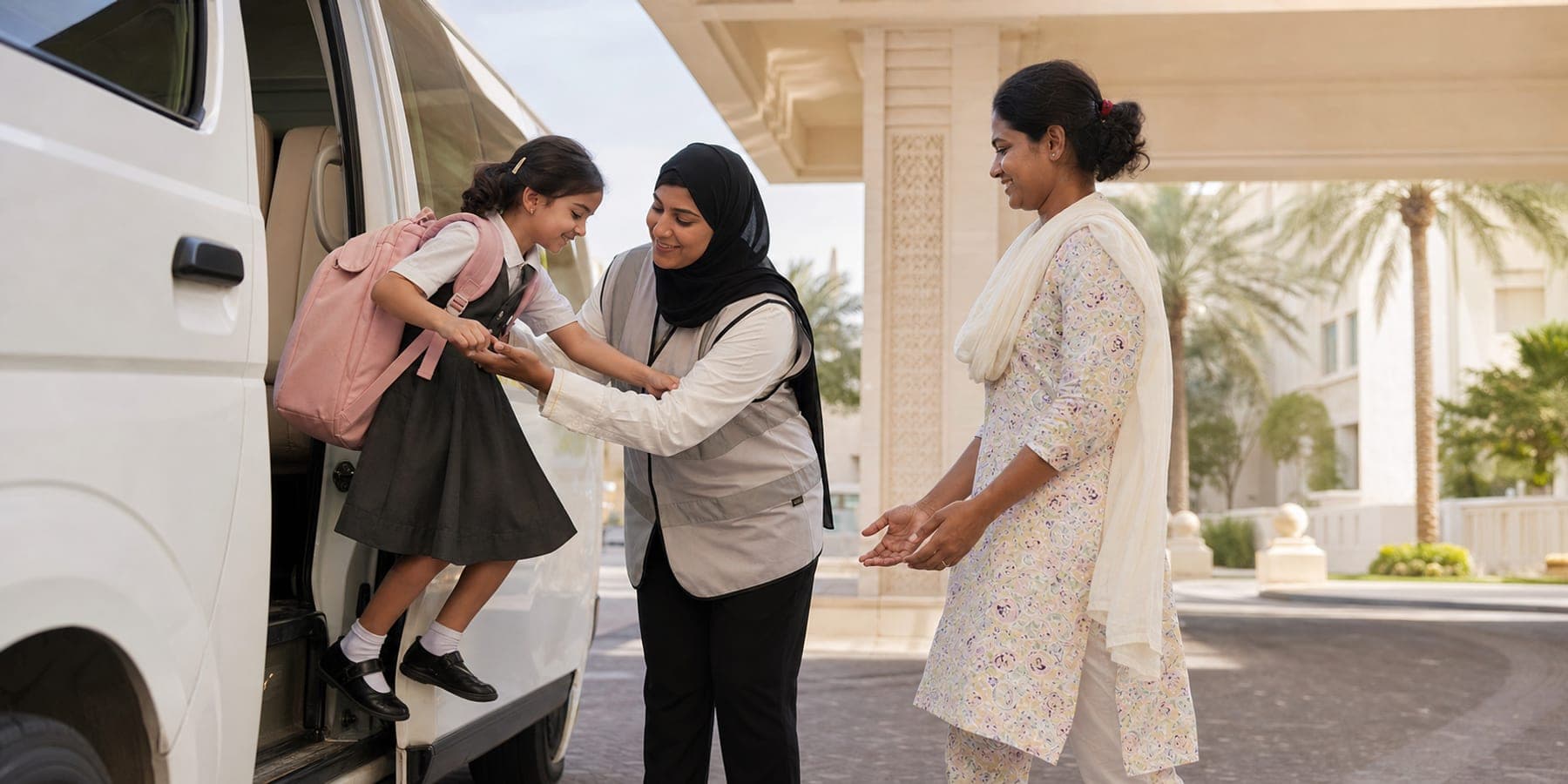
Support family pickup arrangements without ambiguity
The receiving adult may be a parent, relative, family driver, nanny or temporary delegate. SchoolsOut supports authorized collectors, same-day changes, emergency backups and sibling plans within the school or operator’s own approval and identity process.
Arabic and English interfaces help families and operational teams use the same workflow. SchoolsOut does not claim Ministry or Transport General Authority approval; each organization remains responsible for its policy, safeguarding decisions and regulatory assessment.
Design the exception path before launch
Pilot scenarios should include a late vehicle, absent child, changed collector, no receiving adult, dead phone, weak connectivity and a manual fallback. Each exception needs an owner, an escalation route, a supervised child state and a final recorded outcome.
Notifications should be useful rather than noisy: confirmation of the plan, material change, approach or delay, action required and completed handoff. Human staff keep control of emergency and disputed cases.
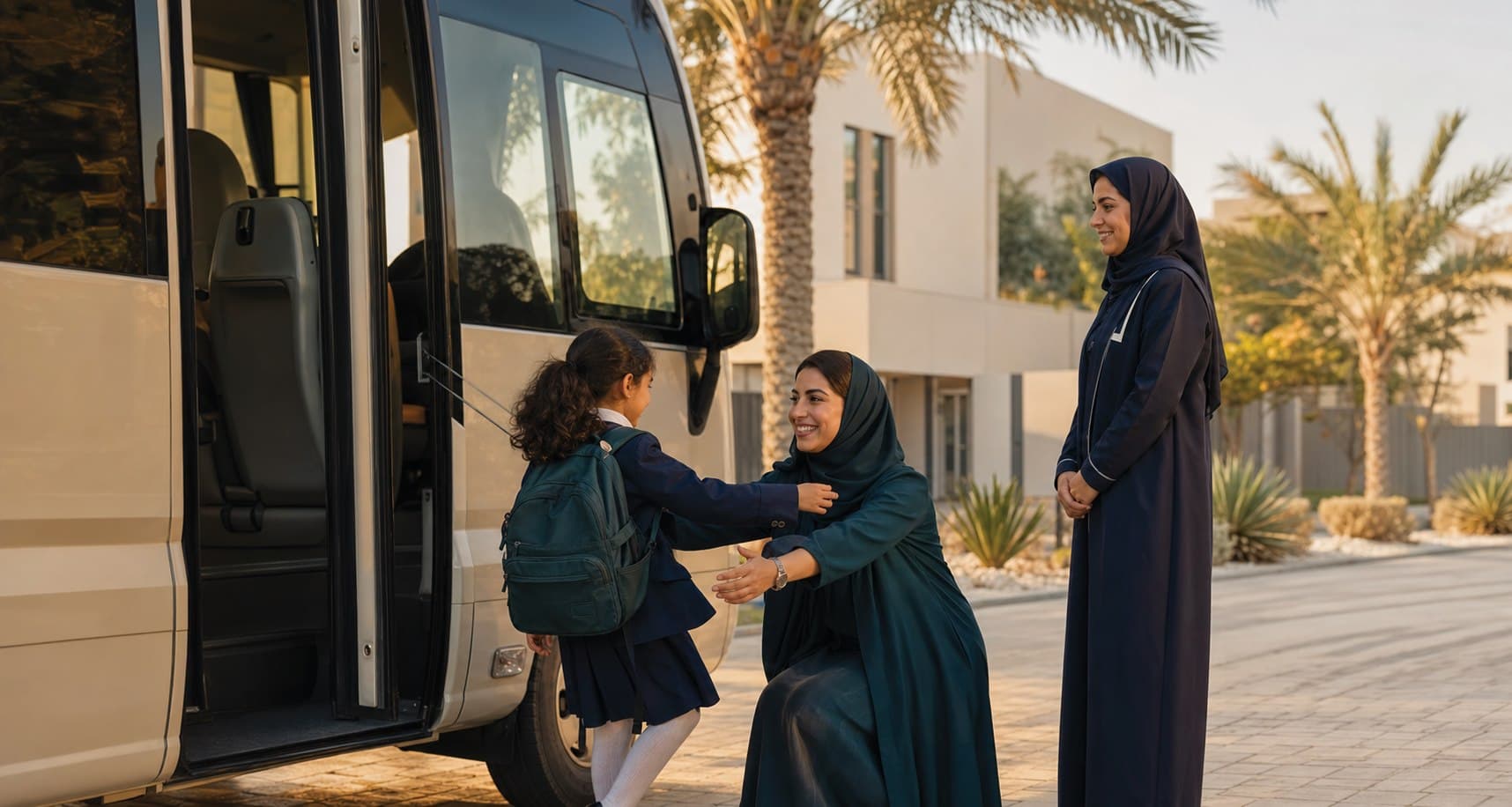
Start with one route, campus or operator workflow
A focused Saudi pilot can begin with one private-school campus, one route group or one operator contract. Map roster ownership, daily travel confirmation, supervisor actions, family visibility, the receiving rule and the fallback when the expected person is absent.
Keep existing routing, fleet, billing and school administration products. Test whether SchoolsOut creates a calmer, more accountable journey layer, then expand only after the normal path and difficult exceptions work in Arabic and English.
Questions to resolve before rollout
Is SchoolsOut only a school bus tracking app?
No. GPS is one input. SchoolsOut connects the expected child, boarding and journey states, receiving-adult context, exceptions and confirmed handoff.
Can families use Arabic?
Yes. Arabic is supported with RTL, alongside English and other languages.
Can a family driver or nanny receive a student?
The workflow can represent parents, relatives, drivers, nannies and temporary delegates subject to the organization’s authorization rules.
Does SchoolsOut replace routing or fleet software?
No. It can work beside those systems and focus on the child journey, family coordination and handoff.
Can we pilot one route?
Yes. One route is a practical scope for testing rider changes, delays, receiving adults and fallback procedures.