
Morning: changes arrive before the cut-off
The afternoon starts in the morning. Families who need to change today’s plan submit the change in SchoolsOut: a car rider walking home with a neighbor, a grandparent collecting, siblings splitting between aftercare and the carline. The school sets a cut-off time for routine changes and decides which kinds of change the front office reviews.
By the cut-off, the office has a current picture: which students are car riders today, who is expected to collect them and which requests still need a decision. Late requests are still possible, but they are visible as late, and the school’s policy decides how they are handled.
Before the bell: staff and lists are ready
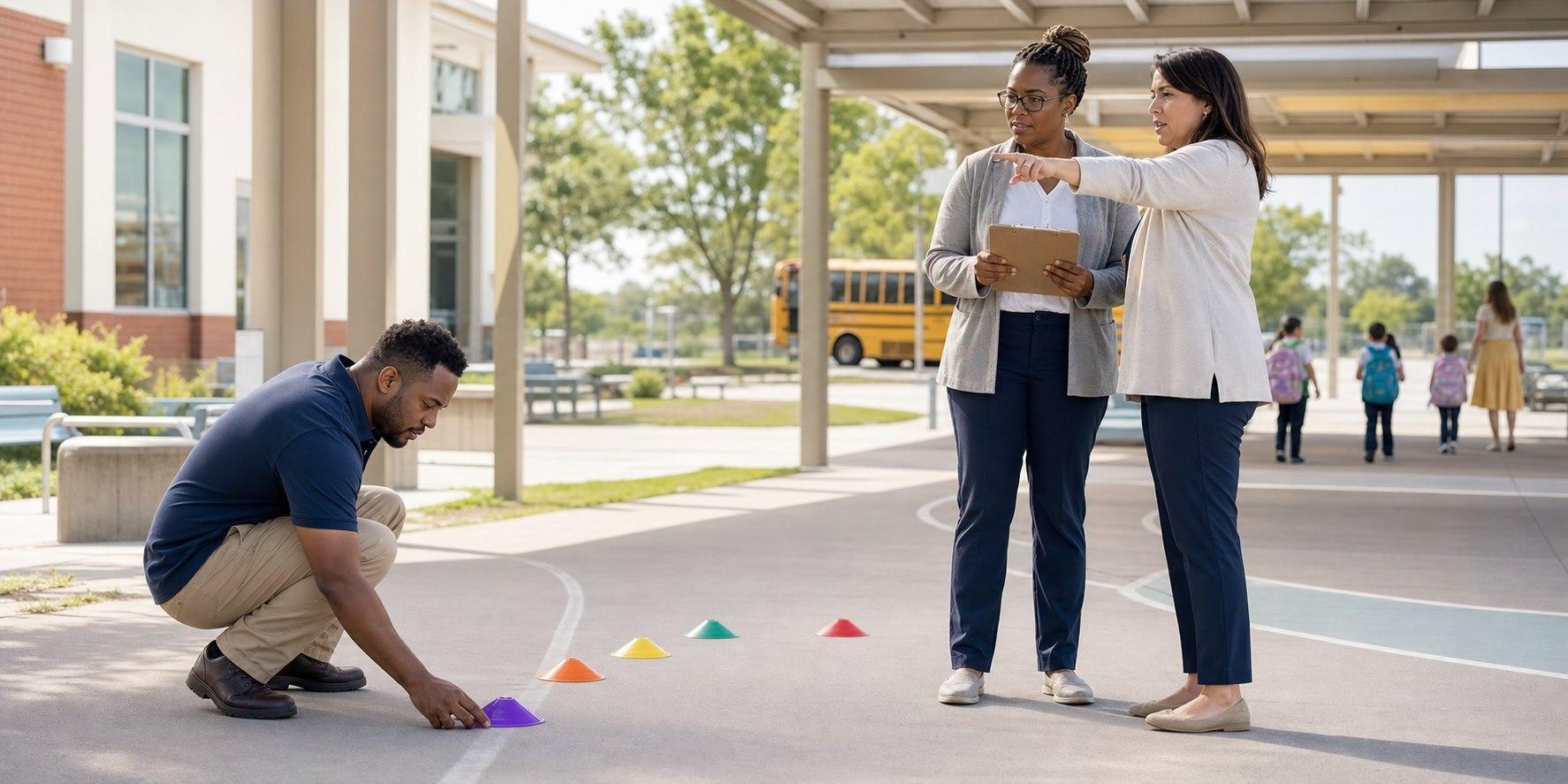
Before dismissal, the dismissal team checks positions, cones, crossings and the staging area, as described in our carline improvement guide. In SchoolsOut, teachers and carline staff work from the same live list, which already reflects accepted changes. Nobody is reprinting a roster or carrying sticky notes to classrooms.
The office keeps an eye on anything unresolved: a change awaiting review, a delegated collector added at short notice, a family that has said they will be late. Those cases are flagged before the first car arrives, not discovered at the curb.
- Accepted changes already reflected in today’s car rider list
- Delegated and temporary collectors visible to authorized staff
- Pending or late requests clearly separated from accepted plans
- Staff positions, backups and the exception spot agreed
Arrival and staging: calling the right student
As families join the carline, parents in a configured flow announce arrival. The dismissal team sees the pickup can progress and calls the student from the classroom or holding area to staging, away from moving vehicles. Because the plan is current, staff are calling students who are actually car riders today.
Arrival does not mean release. A student who has been called is waiting, not gone. SchoolsOut keeps the states distinct: expected, arrived, awaiting release and released. That makes it easy to see which students are staged and which families are still in the queue.
Release at the curb
When a vehicle reaches a loading position, the staff member at the curb has the student’s collector context: the expected adult and any delegate for today. They confirm the adult in person under school policy, load the student and mark the release. SchoolsOut records the collector, the time and the pickup mode.
Parents can receive notifications as the afternoon progresses. Notifications are helpful, but delivery is never guaranteed, so the handover at the curb remains the moment that counts.
Exceptions and the closing check
Some pickups do not fit. A driver is not the expected adult, a parent’s phone is dead, a family is running late or a student cannot be found. These move to the exception spot while the child stays supervised. SchoolsOut supports manual and no-app fallback, emergency backup collectors, parent delay or ETA updates and messaging, and the dismissal lead decides the next step under the school’s policy. SchoolsOut does not check IDs or enforce custody orders automatically.
When the last routine car leaves, the team runs a closing check. Every car rider should be released, moved to an onward destination such as aftercare, or still supervised with a known reason. Release history and reports give the office collector, time and mode for each student, which supports the check and any question from a family the next morning.
Why the steps stay separate
It can be tempting to collapse the afternoon into a single event: the parent arrives, the child leaves. Keeping the steps distinct is what makes the carline safe to run and easy to review. A change that has been submitted is not yet a change that has been accepted. A family that has announced arrival has not yet received their child. A student who has been called is supervised in staging, not released.
Each separation answers a practical question. If a family says they were never told their change was declined, the review step shows what happened. If a student is not where staff expected, the difference between called and released narrows the search. If a parent asks the next morning who collected their child, the release record answers without anyone relying on memory.
This is also why SchoolsOut avoids speed claims. A carline that skips steps can look faster for a week and then fail on the first difficult afternoon. The aim is a predictable process that staff can run on a rainy early-release day with a substitute on the curb, not a stopwatch figure.
Frequently asked questions
Is this what every SchoolsOut school does?
No. This is a representative walkthrough. Each school configures its own cut-off times, review rules, pickup modes and staff roles.
Are there screenshots of the product?
We do not publish product screens. The diagram on this page is a workflow illustration, and we show the live product in a demo.
What happens to changes after the cut-off?
Late changes can still be submitted, but the school decides how they are reviewed and communicated. They should be visible as late rather than silently added to the list.
Who confirms the adult at the curb?
Staff do, using the collector and delegation context SchoolsOut shows. SchoolsOut does not perform automatic identity checks.
What does the closing check look for?
Any car rider who is not released, moved to an onward destination or knowingly supervised. Release history and reports make those students easy to spot.
Can we try this on one lane first?
Yes. A focused pilot on one lane or grade is the recommended way to test the workflow and your exceptions before a wider rollout.