
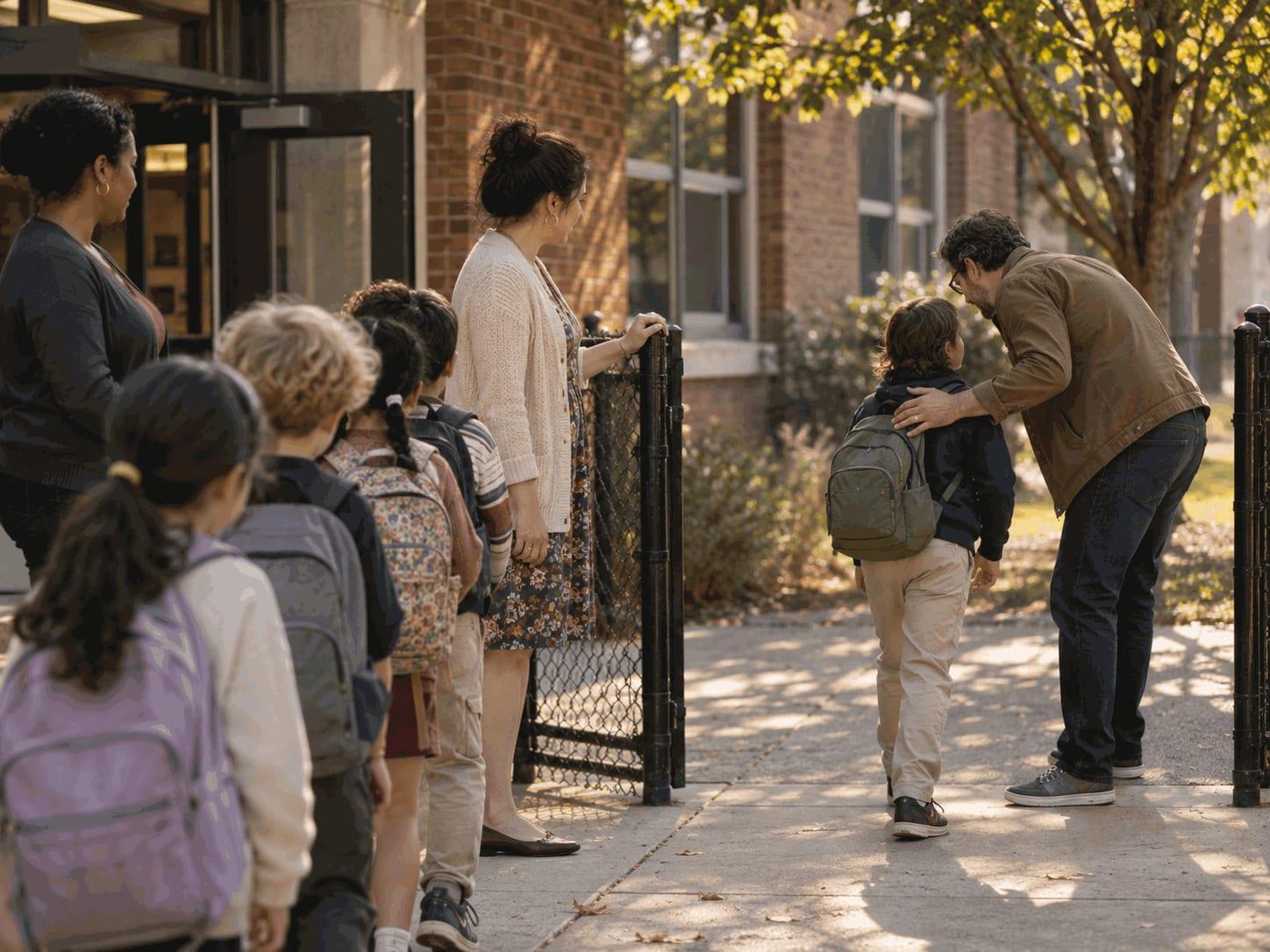
Every dismissal mode, one plan
Many campuses run dismissal as several separate operations: a carline list, a walker sheet, a bus roster from transportation and an aftercare sign-in held by another team. Each works on its own until a student moves between them. A car rider who becomes a walker, or a bus rider who stays for a club, exposes the gaps.
SchoolsOut supports multiple configured pickup modes in one dismissal. Each student has an expected mode for today, and staff can see it change when a family submits a request. Exact modes depend on the school’s configuration, so a K–5 campus and a K–8 with several programs can model their own reality.
- Car riders through a configured carline
- Walkers, including those met by a parent at the gate
- Bus riders, with pickup and drop-off status for families
- Aftercare, clubs and other on-campus destinations
- Delegated and temporary collectors across every mode
Same-day changes without rebuilding lists
The routine plan is rarely the problem. The change that arrives after lunch is. Parents can submit and manage dismissal changes in SchoolsOut, and the school decides which changes need review and what cut-off applies. Once a change is accepted, the updated plan is what teachers and the dismissal team see.
This removes a familiar afternoon task: someone in the front office retyping or re-reading a list, then walking a note to a classroom. It does not remove judgment. Staff should still look at late or unusual requests, and the system should show who asked, for which student and date, and whether the request has been accepted.
Coordinating the front office, teachers and dismissal team
Different people need different views. The office reviews changes and delegations. Teachers need to know when to send a student and where. The dismissal team at each exit needs the approved outcome and the collector context for the students in front of them. SchoolsOut’s browser-based school dashboard covers student and parent information, requests, delegations and live dismissal.
Bus visibility is part of the same picture. SchoolsOut can tell families about bus pickup and drop-off status, so a bus rider is not a blank between the curb and home. The exact event source and driver workflow are confirmed during setup; SchoolsOut works beside district transportation systems rather than replacing them.
Exceptions across modes
Exceptions do not respect mode boundaries. A walker’s parent arrives in a car. A bus is late and two riders are collected instead. An aftercare student is picked up early by a delegated grandparent. A system that only understands one mode pushes these back to the radio.
SchoolsOut supports manual and no-app fallback, emergency backup collectors, parent delay or ETA updates, messaging and configurable exception handling. The school’s policy decides what staff do. SchoolsOut makes the current plan, the authorization context and the outcome visible, and does not claim automatic identity or custody enforcement.
End-of-day reconciliation
Dismissal ends when every student is resolved, not when the last car pulls away. A closing check should confirm that each student was released to an adult, boarded a bus, reached aftercare or remains supervised for a known reason. Students still on campus without a plan should be obvious, not discovered later by a phone call.
SchoolsOut keeps release history and reports with collector, time and pickup mode, which supports that closing check and later questions from families. Records support your process; they are not described as immutable and do not by themselves meet a legal requirement. Start with one grade or one campus and include reconciliation in the pilot from day one.
Rolling out a campus-wide dismissal system
Moving every mode onto one system at once is rarely necessary. Many schools start where the pain is sharpest, often the carline or same-day changes, then add walkers, bus riders and aftercare once staff trust the workflow. What matters is that the first phase already uses the same student plan the later phases will rely on, so nothing has to be rebuilt.
Before configuring anything, map the current afternoon. List every way a student can leave, every channel through which a change can arrive (phone, email, notes, the app), every person who touches a decision and every place where a list is printed or copied. That map shows where ambiguity comes from and which steps SchoolsOut should own first.
Agree the rules early: change cut-offs, which requests need review, who can add a delegated collector, how bus changes reach transportation, and who runs the closing check. Then pilot with real exceptions rather than a quiet week. A district can repeat the same approach campus by campus, adjusting modes and roles to each building instead of forcing one template on all of them.
Frequently asked questions
What is a student dismissal system?
It is the set of procedures and tools a school uses to send every student home or onward each day, across car riders, walkers, bus riders and after-school programs. It should keep plans current, support release and confirm that every student was accounted for.
Can SchoolsOut handle car riders, walkers and bus riders together?
Yes. SchoolsOut supports multiple configured pickup modes, including car and walker lines, with bus pickup and drop-off visibility. A pilot maps the exact modes your campus uses.
How are aftercare and clubs handled?
On-campus destinations can be part of the student’s plan for the day, so staff know a student is staying rather than missing. The handover at the end of aftercare follows the same collector context.
Does SchoolsOut replace our SIS or bus routing software?
No. SchoolsOut is the dismissal and handover layer that works beside your SIS and transportation systems. Named integrations are discussed during discovery rather than assumed.
How do we know every student was accounted for?
Staff should run a closing check against the day’s plan. SchoolsOut’s release history and reports show collector, time and pickup mode, so unresolved students stand out.